
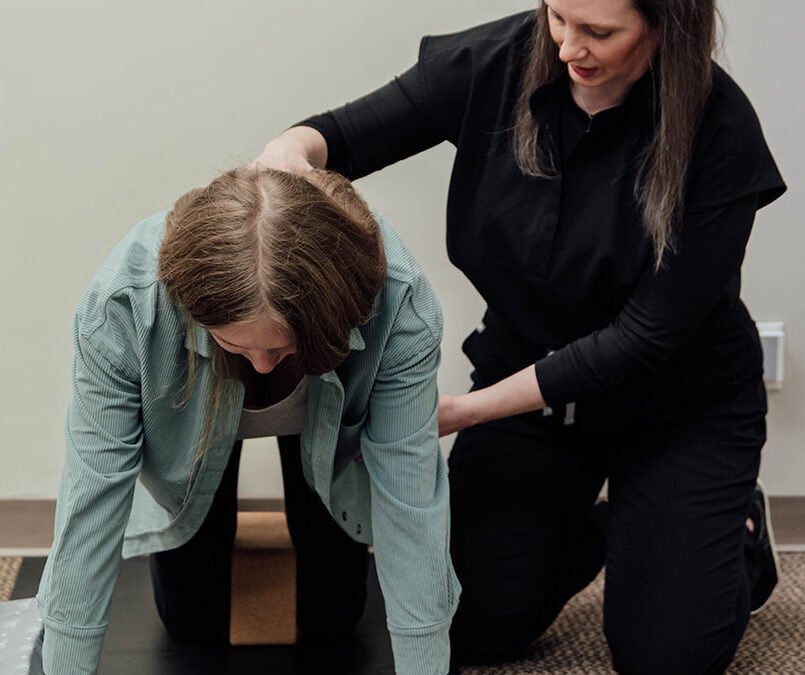
Are your ribs, upper back, or shoulders constantly feeling tight after pregnancy? Do your favorite dresses, shirts, or bras seem to fit differently than they did before having a baby?
You’re not alone!
Many moms experience persistent rib tightness, upper back pain, shoulder tension, or a feeling of restriction through their torso during pregnancy and postpartum. And while stretching may provide temporary relief, it doesn’t always address the underlying reason you’re feeling uncomfortable.
The good news? Postpartum physical therapy may help improve rib mobility, ease muscle tension, and restore more comfortable movement.
At our clinic, we look at how your rib cage, spine, breathing mechanics, core, and pelvic floor work together to help you feel and move your best.
Why Do Your Ribs and Upper Back Feel Tight After Pregnancy?
During pregnancy, your body adapts to make room for your growing baby. Your rib cage can expand, your posture changes, and the way your spine and surrounding muscles handle everyday movement shifts.
Your breathing mechanics also change as your abdomen grows and your diaphragm adapts to the space available.
After birth, these changes don’t necessarily resolve overnight.
You may continue to experience:
- Tightness around your ribs or bra line
- Upper back pain or stiffness
- Shoulder and neck tension
- Discomfort when taking a deep breath
- A feeling of restricted movement through your torso
- Difficulty getting comfortable while sleeping, feeding, or carrying your baby
- Clothing that fits differently around your rib cage
These symptoms can have several contributing factors, including muscle tension, joint stiffness, posture, breathing patterns, and changes in how your body manages movement and load.
Your body has been through a lot, and persistent discomfort deserves more than being told to stretch and wait it out.
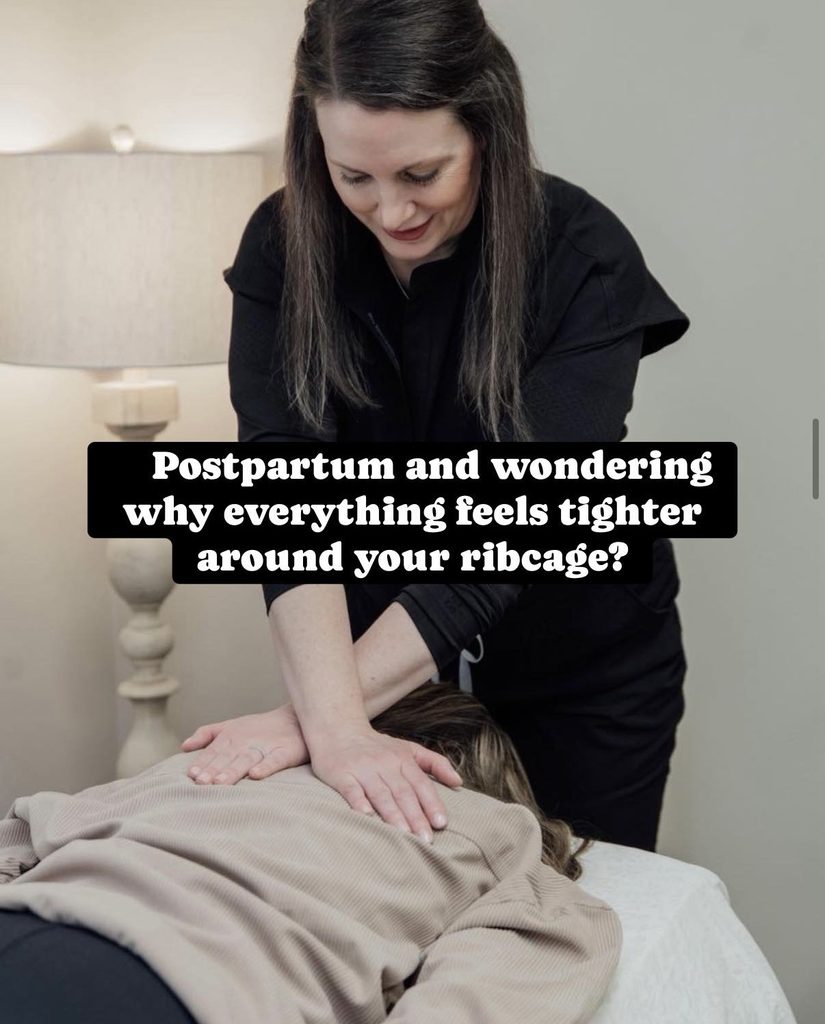
Why Stretching Doesn’t Always Relieve Rib Tightness
Stretching can feel wonderful when your upper back and ribs are stiff. However, if your symptoms are related to restricted joint mobility, muscle tension, breathing mechanics, or how your body moves throughout the day, stretching alone may not provide lasting relief.
For example, you might stretch your chest or upper back and feel better for a few minutes, only to notice the tightness return when you’re feeding your baby, sitting at your desk, or carrying your little one.
That’s because the area that feels tight isn’t always the only area contributing to the problem.
Your rib cage, thoracic spine (the middle portion of your back), diaphragm, abdominal muscles, and pelvic floor work together as part of your body’s pressure and movement system.
When one area isn’t moving or coordinating comfortably, other areas may have to compensate.
This is why an individualized assessment can be helpful when rib tightness or upper back discomfort keeps returning.
How Pelvic Floor Physical Therapy Can Help Rib and Upper Back Tightness
You might be wondering what your pelvic floor has to do with your ribs.
More than you might think!
Your diaphragm and pelvic floor coordinate with your breathing and abdominal muscles to help manage pressure within your trunk. Your rib cage and spine also need to move comfortably for efficient breathing and everyday movement.
At our clinic, we evaluate the bigger picture rather than treating your symptoms in isolation.
Depending on your individual needs, treatment may include:
1. Gentle Manual Therapy
Manual therapy can help address restricted movement in the joints and soft tissues around your ribs and upper back.
When appropriate, these hands-on techniques may help improve mobility, reduce discomfort, and make everyday movements feel easier.
2. Rib Cage and Thoracic Spine Mobility
Your ribs connect with your thoracic spine, which plays an important role in upper-body movement and breathing.
Improving mobility in these areas may help you move more comfortably when reaching, turning, lifting, and caring for your baby.
3. Breathing Mechanics
Your diaphragm is a major breathing muscle, and your rib cage needs to move to accommodate a comfortable breath.
We may assess how you breathe and how your rib cage moves, then work on strategies to support comfortable, coordinated breathing.
4. Core and Pelvic Floor Coordination
Pregnancy and childbirth can change how your abdominal muscles and pelvic floor function.
When appropriate, treatment may include exercises and strategies to improve coordination between your breathing, core, and pelvic floor.
The goal isn’t simply to strengthen everything. It’s to help the right muscles work together in a way that supports your body and your daily activities.
5. Personalized Movement Strategies
Sometimes small adjustments to how you sit, feed your baby, carry your child, or perform everyday tasks can make a meaningful difference in your comfort.
We’ll help identify strategies that fit your body, symptoms, and lifestyle.
Can Rib Mobility Treatment Help Your Clothes Fit Differently?
This is one of the things moms sometimes notice after treatment!
Some patients report that their dresses, shirts, or bras feel more comfortable or fit differently after manual therapy to address rib and upper back mobility.
Why might that happen?
Changes in muscle tension, posture, and how comfortably your rib cage moves may affect how your torso feels and how clothing sits against your body.
However, clothing fit is influenced by many factors, including natural changes in body shape, pregnancy-related adaptations, and postpartum recovery. Manual therapy cannot guarantee a change in rib cage measurements or a return to your pre-pregnancy clothing size.
Our goal is to help you move more comfortably, improve mobility where appropriate, and feel more at ease in your body.
And if your favorite dress feels more comfortable along the way, that’s a lovely bonus!
Do You Need Physical Therapy for Rib Tightness During Pregnancy or Postpartum?
You don’t have to be newly postpartum to benefit from an evaluation.
Pregnant women, recently postpartum moms, and women experiencing longstanding upper back or rib discomfort may all benefit from an individualized assessment when symptoms interfere with daily life.
Consider seeking an evaluation if you’re experiencing:
- Persistent rib or upper back tightness
- Recurrent shoulder or neck tension
- Discomfort with deep breathing or torso movement
- Stiffness that keeps returning despite stretching
- Difficulty getting comfortable while sleeping or caring for your baby
- Pain that limits exercise or everyday activities
New, severe, or unexplained chest or rib pain, particularly with shortness of breath, chest pressure, faintness, or other concerning symptoms, needs prompt medical assessment rather than routine physical therapy.
Feel More Comfortable in Your Body Again
Pregnancy and postpartum recovery involve many changes, and you deserve support when those changes leave you feeling stiff, restricted, or uncomfortable.
At our clinic, we take the time to understand how your ribs, spine, breathing mechanics, core, and pelvic floor work together. From gentle manual therapy to personalized movement strategies, your care is tailored to your symptoms and goals.
You don’t have to keep stretching the same tight area and hoping it eventually goes away.
If you’re struggling with postpartum rib tightness, upper back pain, or persistent tension during pregnancy, we’re here to help.
Schedule a discovery call with our team to learn how personalized physical therapy may help you move more comfortably and get back to the activities you love.